
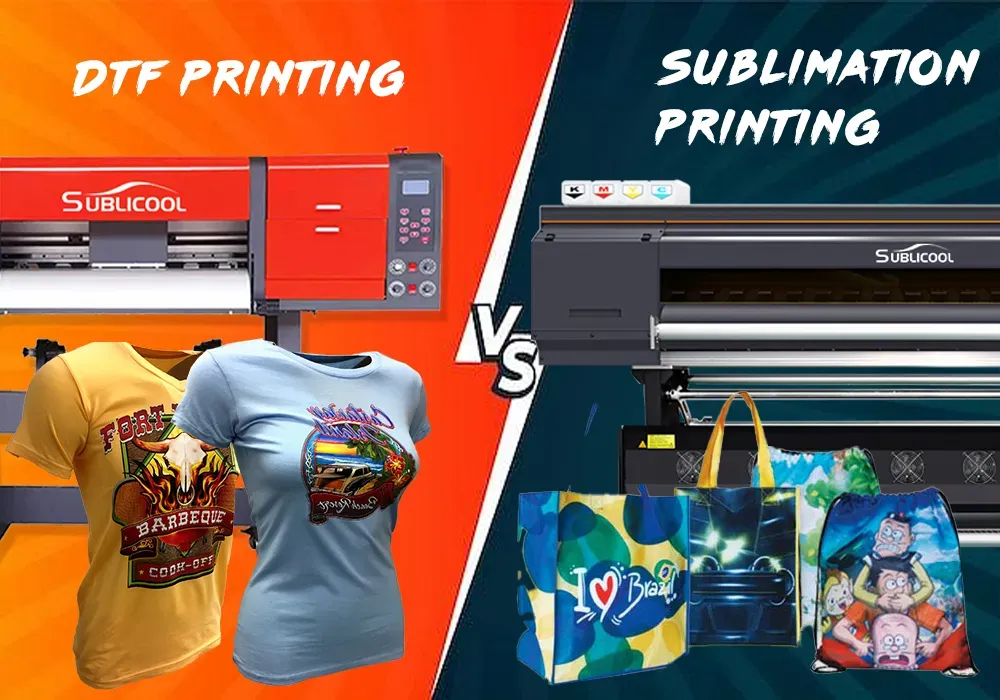
DTF vs Sublimation is a common crossroads for small businesses, apparel brands, and hobbyists deciding how to transform digital designs into wearable or usable products. DTF printing offers versatile fabric compatibility, including cotton and blends, with strong color depth and a white underbase advantage on dark fabrics. A heat-transfer process for synthetic materials can deliver vibrant color and a soft hand on polyester while remaining durable. Understanding differences between these methods helps you map which option fits your fabrics, design requirements, and production goals. This perspective sets the stage for choosing a practical approach that aligns with budget, turnaround, and end-use.
From an LSI-informed perspective, the topic can be framed as film-to-fabric transfers and dye-based heat applications that move designs onto textiles. One path uses a film with adhesive to cling to cottons and blends, while the other relies on heat-activated dyes binding to polyester-coated surfaces. By using these alternative terms, readers can connect the concepts to substrate choices, finish, and durability without getting lost in brand names.
DTF Printing Fundamentals: How Direct-To-Film Works
DTF printing uses a PET film as the carrier onto which designs are printed with water-based or pigment inks. After printing, an adhesive powder is applied and cured, and the design is transferred to fabric with heat and pressure. Unlike some transfer methods, DTF does not require trimming around the edges of a pre-printed carrier; you simply press the film onto the target fabric and peel away the carrier after cooling.
DTF printing offers notable advantages in fabric versatility, color depth, and white underbase capability. It delivers solid opacity on dark fabrics while maintaining good detail in complex, multi-color designs. With minimal pre-treatments on many fabrics and cost efficiency for small runs, DTF is popular for customized, short-run orders and flexible production workflows.
Sublimation Printing Explained: Color, Transfer and Substrates
Sublimation printing uses heat-activated dyes that convert from solid to gas and bond with a polymer surface. The design is printed on special transfer paper with sublimation inks and then heat-pressed onto a substrate that is polyester-based or polymer-coated. The result is vibrant color, a soft hand, and a durable finish where the dye becomes part of the surface.
Sublimation is especially effective for all-over or large-area designs on white or light-colored polyester and coated items. Because the ink becomes part of the substrate, sublimation prints remain breathable and flexible, with exceptional color saturation and minimal texture on suitable materials.
DTF vs Sublimation: Key Differences You Need to Know
DTF and sublimation differ in substrate compatibility, finish, and the range of usable materials. DTF is versatile across cotton, blends, and a broader set of textiles, offering solid white underbase capabilities for dark garments. Sublimation requires polyester or polymer-coated surfaces to achieve its best results, with color that is highly saturated on those substrates.
Another critical difference lies in durability, feel, and suitability for all-over designs. Sublimation typically yields a softer hand and strong colorfastness on appropriate substrates, while DTF’s durability depends on fabric composition, wash testing, and adhesion quality. The choice between them often comes down to material goals and the intended wear or use case.
DTF vs Sublimation Use Cases: Which Method Fits Your Projects
DTF use cases focus on cotton or cotton-blend garments, such as T-shirts and hoodies, especially when dark fabrics require a white underbase and crisp color. It also works for custom orders on non-fabric items with coatings where flexible surface decoration is practical, making it a strong option for small- to mid-sized runs.
Sublimation use cases shine for all-over or large-area designs on polyester apparel, mugs, phone cases, and other polymer-coated items. It’s an excellent fit for high-color, promotional campaigns and durable outdoor gear, where vibrant saturation and a soft touch on synthetic substrates are key requirements.
Print Transfer Methods: DTF and Sublimation in Practice
DTF print transfer methods begin with printing on a PET film using water-based or pigment inks, followed by adhesive powder application and curing. The final transfer to fabric uses heat and pressure, enabling efficient handling of complex designs and broad fabric compatibility.
Sublimation transfer methods involve printing the design onto sublimation transfer paper, then applying heat and pressure to a polyester or polymer-coated substrate. The dye bonds at the molecular level, producing a durable, vibrant image with a smooth hand on compatible materials.
Choosing Between DTF and Sublimation: A Quick Decision Guide
Key decision factors include fabric type, design requirements, run size, and end-use durability. If you work mainly with cotton or blends and need a solid white base on dark fabrics, DTF is often the practical choice; for all-over color on polyester, sublimation tends to deliver superior saturation and permanence.
A practical approach is to pilot both methods on a small batch to compare color, feel, and wash durability on your target fabrics. Evaluate total cost per piece, equipment needs, and maintenance to determine which transfer method aligns best with your product mix and production goals.
Frequently Asked Questions
DTF printing vs Sublimation Differences: What are the core differences between DTF printing and sublimation printing?
DTF printing uses a PET film with adhesive powder and presses onto a wide range of fabrics, including cotton and blends. Sublimation printing bonds heat-activated dyes into polyester or polymer-coated surfaces, delivering vibrant color with a soft hand. In short, DTF is highly versatile across fabrics and dark garments, while sublimation excels on white/light polyester substrates and coated surfaces.
DTF printing vs sublimation use cases: Which transfer method is best for cotton fabrics?
For cotton and cotton blends, DTF printing often provides reliable adhesion, vivid color, and white underbase capability for dark shirts. Sublimation is best on polyester or polymer-coated items; on cotton it’s generally less effective unless you use special coatings or blends.
DTF vs Sublimation use cases for all-over designs: When should you choose each?
All-over prints are typically ideal for sublimation on polyester, enabling seamless coverage and strong color. DTF can handle detailed artwork on dark fabrics, but is less common for full-coverage all-over designs. Choose sublimation for all-over looks on polyester, and DTF for detailed graphics on dark cotton blends.
Print transfer methods: How do DTF printing and sublimation compare in durability and wash performance?
Sublimation yields highly durable colors on suitable substrates, with excellent washfastness. DTF durability depends on fabric type and washing; testing on your specific blends is recommended. Both require proper prep and care to maximize longevity.
Cost and setup: Is DTF printing or sublimation more cost-effective for small-batch runs?
DTF generally offers lower setup costs for small runs, making it economical for customized, low-volume orders. Sublimation can become more cost-efficient for larger runs on polyester or coated substrates, where per-piece costs drop with volume.
Mugs and hard goods: Can DTF printing work on mugs or hard surfaces as well as sublimation?
Sublimation is the standard choice for mugs and many coated hard surfaces due to dye bonding. DTF can decorate some hard goods with compatible coatings, but it is less common for curved or non-fabric items. For mugs and most hard goods, sublimation is the preferred method.
| Aspect | DTF (Direct-To-Film) | Sublimation |
|---|---|---|
| What it is | DTF (Direct-To-Film) prints onto a PET film with adhesive powder, then transfers to fabric with heat; no carrier trim required. | Sublimation uses heat-activated dyes printed on transfer paper and bonded to polyester or polymer-coated surfaces via heat; dyes become part of the surface. |
| Best substrates / materials | Cotton, blends, polyester, and a wide range of textiles; some hard surfaces with coatings. | White or light-colored polyester and polymer-coated items; not suited for cotton without special prep. |
| Finish / hand feel | Can feel slightly thicker due to film and adhesive layer. | Soft hand; dye becomes part of the surface. |
| Color depth / vibrancy | Vibrant colors with good detail; white underbase enables opacity on dark fabrics. | Exceptional color vibrancy on suitable substrates; color remains consistent over time. |
| Durability | Durability depends on fabric and wash; testing advised; generally reliable on appropriate fabrics. | Very durable on polyester and coated surfaces; colorfast and resistant to cracking when used on correct substrates. |
| All-over / large-area designs | Better for targeted designs; not ideal for all-over prints. | Excellent for all-over or large-area color coverage on suitable substrates. |
| Typical use cases | Small runs, dark garments, complex colorways, non-fabric items. | All-over polyester apparel, mugs/hard goods, coated surfaces. |
| Cost / setup considerations | Lower setup for small runs; ongoing costs for films, powders, curing steps. | Outlays for dye inks, coated papers, heat presses; cost efficient for larger runs on suitable substrates. |
Summary
DTF vs Sublimation presents two distinct, widely-used paths for decorating apparel and accessories, each with its own strengths and limitations. DTF offers broad fabric compatibility, white underbase on dark garments, and cost flexibility for small runs; Sublimation delivers vibrant color, a soft hand-feel, and durability on polyester and coated surfaces, ideal for all-over designs. When deciding between the two, consider fabric type, design goals, run size, durability expectations, and substrate compatibility. By mapping your product mix to these methods, you can optimize workflow, maintain quality, and meet customer expectations. Ultimately, both methods have a place, and selecting the right tool for the right job ensures your designs look great and wear well across the intended materials.

