
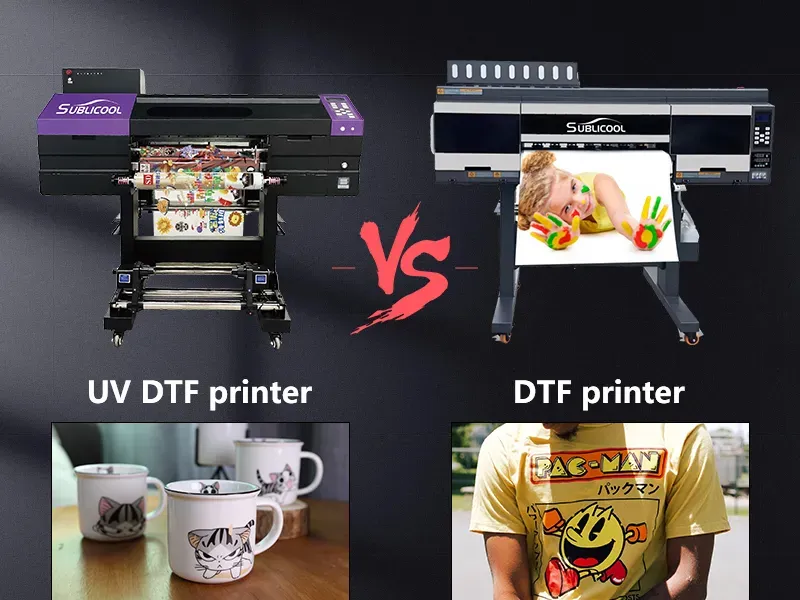
In the ever-evolving landscape of printing, the competition between UV DTF vs Traditional Printing is becoming increasingly significant for businesses and creatives alike. While traditional printing methods have long established their reliability, UV Direct to Film (DTF) printing is gaining traction for its innovative approach to quality and durability. This detailed printing methods comparison will evaluate the advantages of both technologies, focusing on how UV DTF printing excels in producing vibrant colors and intricate details. As we delve deeper into this assessment, we will see how the durability of UV DTF printing provides a compelling advantage when contrasted with the quality of traditional printing methods. Join us as we explore which option may be better suited for your next printing project, weighing the merits of each technique to uncover the best choice for your needs.
When considering various options for printing projects, understanding the differences between contemporary and classic techniques is paramount. The debate surrounding UV Direct to Film (DTF) and traditional printing reveals significant insights about efficiency and output quality. Also known as UV curing printing, UV DTF utilizes advanced technology that cures inks instantly, whereas methods reliant on offsets and screen printing have been tried and true for generations. Each printing process brings unique benefits to the table, from the immediate handling of UV prints to the color accuracy of established techniques, making this a fascinating topic of examination within the realm of visual communication.
Understanding UV DTF Printing Technology
UV Direct to Film (DTF) printing represents a significant advancement in printing technology. This innovative method employs ultraviolet light to instantaneously cure inks as they are applied, leading to immediate usability of the prints without any requisite drying time. A prominent advantage of UV DTF printing lies in its capacity to produce exceptionally vibrant colors and detailed designs, making it a favored choice for custom prints and complex artwork. Businesses utilizing this technology benefit not only from its efficiency but also from its remarkable reproduction of colors, ensuring that end products maintain high visual appeal regardless of the substrate used.
The rise of UV DTF printing has transformed the way industries approach print production, offering an alternative that caters to a wide range of materials. It excels in flexibility, allowing for printing on both rigid and flexible surfaces, which is often a limitation for traditional printing methods. The incorporation of advanced UV curing also aids in enhancing ink adhesion, which is crucial in ensuring that images retain their vibrancy over time. With minimal setup time compared to traditional options, UV DTF becomes particularly advantageous for short runs or personalized printing projects, where high detail and rapid turnaround are essential.
Benefits of UV DTF Compared to Traditional Printing
One of the standout benefits of UV DTF printing is its superior ability to cater to intricate designs and vivid colors. Traditional printing methods, while reliable, often struggle with maintaining color consistency and clarity when faced with complex graphics. UV DTF's precision can produce sharper details and brighter hues, making it an ideal option for products that require capturing every nuance of a design. This heightened print quality not only enhances the aesthetic appeal but also bolsters brand identity through vivid representation.
Moreover, UV DTF printing eliminates many of the issues traditionally associated with ink running or smudging, particularly in environments where prints might be handled immediately after creation. This instant curing process enhances durability from the outset, ensuring that print outputs are robust and ready for immediate use. As a result, businesses and artists can have more confidence in the quality of their outputs compared to the uncertain drying times of traditional printing methods, where prints may require additional handling precautions.
Durability Assessment of UV DTF vs Traditional Printing
When evaluating the durability of UV DTF versus traditional printing methods, UV DTF clearly emerges as a strong contender. The UV curing process not only hardens the ink onto the substrate but also provides a protective layer that enhances resistance to UV exposure, scratches, and fading. This durability is especially crucial for products that will be displayed outdoors or subjected to frequent handling, as UV DTF ensures that colors remain vibrant and images intact over extended periods.
In contrast, traditional printing methods, while durable in their own right, often face limitations based on the types of inks and substrates used. For example, screen printing can offer longevity when applied to textiles, but its effectiveness can vary largely depending on the quality of the inks and surface compatibility. Many users have reported fading and wear over time, especially when compared to the resilience that UV DTF printing is designed to provide. Hence, businesses looking for long-term visual solutions would greatly benefit from the durability that modern UV DTF technology offers.
Cost-Effectiveness of UV DTF for Short Runs
UV DTF printing is revolutionizing cost structures within the printing industry, especially for businesses involved in short runs. The setup costs associated with UV DTF printing are significantly lower than those of traditional methods, making it an economical option for projects that do not require extensive volume production. This is particularly beneficial for small businesses or individual entrepreneurs who wish to produce custom prints without incurring hefty fees associated with larger volume run printing.
Moreover, UV DTF's efficiency not only reduces the initial financial outlay but also decreases the lead time needed for print jobs. With the fast processing capability afforded by UV curing, this technology allows for quick turnaround times and less wastage. Businesses can optimize their resources and react more swiftly to market demands, thus enhancing their operational efficiency. This adaptability and immediate cost-saving potential make UV DTF printing an invaluable option for contemporary printing needs.
Traditional Printing Techniques Explained
Understanding traditional printing methods is essential for appreciating the evolution of modern techniques like UV DTF. Traditional printing, which encompasses processes such as screen printing and offset printing, has been a mainstay in the industry for decades. These methods are characterized by their ability to produce consistent prints, particularly in bulk settings, making them highly effective for promotional materials requiring uniformity across large runs. Many businesses rely on these established techniques for their reliability and proven track record.
Screen printing, for instance, can achieve remarkable detail on textiles and other materials. It utilizes physical stencils to transfer ink onto surfaces, allowing for distinct images and colors. However, traditional printing often struggles with intricate designs or fine details, as the limitations of ink transfer can lead to blurring or less vibrant outputs compared to UV DTF technology. Nonetheless, traditional printing remains relevant for those who prioritize cost savings on large-scale orders and seek a reliable choice with historical efficacy.
Why Choose Traditional Printing for Large Orders?
In scenarios demanding high volumes, traditional printing techniques can offer compelling advantages. These methods, particularly offset printing, excel at delivering consistent quality across extensive product runs, ensuring uniformity in color and design. As per industry standards, the cost per unit tends to decrease with higher quantities produced, making traditional printing not only the practical choice but also an economically sound option for businesses needing bulk printed materials.
Moreover, traditional methods have developed a robust reputation over time, proving their effectiveness in various applications ranging from packaging to advertising. While they may not match the design versatility or immediate durability of UV DTF, their established nature provides businesses with a dependable option for projects where consistency and efficacy are paramount. Companies looking to sustain their brand through reliable, bulk printing should strongly consider traditional methods for guaranteed quality.
Frequently Asked Questions
What is the difference between UV DTF printing and traditional printing methods?
UV DTF printing utilizes ultraviolet light to cure inks quickly, allowing for vibrant colors and intricate designs, while traditional printing methods like screen and offset printing rely on older techniques that may require longer drying times and have varying levels of detail and color consistency.
Which printing method, UV DTF or traditional printing, offers better durability?
UV DTF is known for its superior durability, being resistant to fading and scratches due to the UV curing process that hardens the ink. In contrast, the durability of traditional printing can vary widely based on substrate and ink type, making UV DTF generally more resilient for high-traffic applications.
How does UV DTF printing compare to traditional printing in terms of print quality?
UV DTF printing typically excels in print quality, producing more vivid colors and finer details, while traditional printing can achieve consistency and quality but may struggle with intricate designs, especially on complex materials.
Is UV DTF printing more cost-effective than traditional printing methods?
For short runs, UV DTF printing is often more cost-effective due to lower setup costs and quicker processing times, making it ideal for custom jobs. However, traditional printing may be more economical for large volume orders due to decreasing costs per unit.
Can UV DTF prints be used for outdoor applications compared to traditional prints?
Yes, UV DTF prints are well-suited for outdoor applications due to their enhanced durability and resistance to environmental factors, whereas traditional prints could fade or get damaged more easily, depending on the inks and materials used.
What are the advantages of using traditional printing over UV DTF?
Traditional printing maintains consistent color quality across large runs and can achieve detailed prints on fabrics, making it advantageous for bulk orders and promotional materials that require uniformity, despite its limitations in detail compared to UV DTF.
| Aspect | UV DTF Printing | Traditional Printing |
|---|---|---|
| Print Quality | Produces vibrant colors and intricate details; palms no risk of smudging due to instant curing. | Maintains consistency in color and detail, especially on fabrics, but may struggle with intricate designs. |
| Durability | Highly durable, resistant to fading and scratches, suitable for outdoor use. | Durability varies by substrate and ink; generally good but can be less than UV DTF. |
| Production Efficiency | Cost-effective for short runs; quick setup with fewer materials needed. | More economical for large orders with low cost per unit but less flexible for short runs. |
Summary
UV DTF vs Traditional Printing are two distinct printing methods each with notable strengths. UV DTF printing is distinguished by its ability to produce high-quality, vibrantly colored outputs that are immediately ready for handling and are more resistant to wear and fading. It appeals especially to small businesses or custom projects needing detailed designs. In contrast, traditional printing remains relevant for its consistency and cost-effectiveness over large runs, making it a reliable choice for bulk production needs. Ultimately, the choice between the two depends on various factors including volume, substrate, and design complexity, allowing businesses to choose the method that best fits their specific printing requirements.