
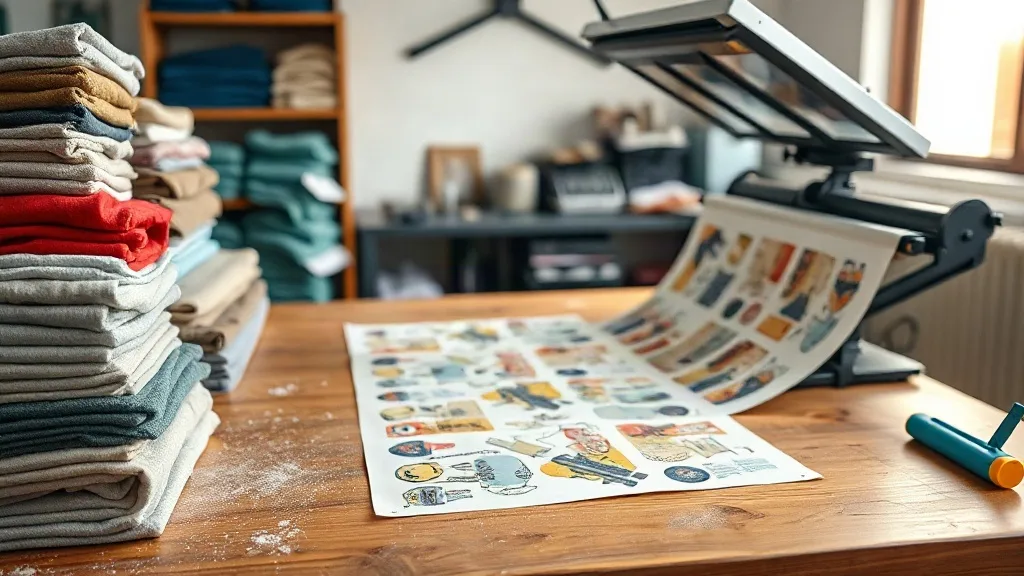
Most print shops do not lose money on ink or vinyl. They lose it in the gap between what a garment costs and what the customer is willing to pay, and that gap is usually decided long before the heat press ever closes. I have spent enough late nights reconciling gang sheet waste against invoice totals to know the pattern: shops that treat blank selection and sheet layout as a single pricing decision stay profitable, and shops that treat them as separate chores quietly bleed cash. shaka wear deserves a closer look through that lens, because heavyweight blanks change the math on every order in ways that a lightweight tee never will.
Why the Blank Choice Sets Your Ceiling
A blank is not a neutral canvas. It carries a weight, a hand feel, a stitch quality, and a perceived value that the customer reads within two seconds of picking it up. When someone hands over a heavyweight tee at a market stall, they expect to feel substance. That expectation is exactly where margin lives.
Lightweight blanks force you into a strange corner. You pay less per unit, but you also cannot charge premium prices without the customer feeling shortchanged. The result is a thin spread between cost and retail, and any mistake in printing, misprint, or size swap eats the entire profit on that garment. Heavyweight blanks flip the equation. The unit cost is higher, but the acceptable retail price climbs faster than the cost does, which widens the spread you actually keep.
The perceived value conversation
Walk a customer through two tees side by side, one at 4.5 oz and one at 6.5 oz, and watch their hands. They squeeze the fabric. They check the shoulder seam. They hold it up to the light. Nobody asks for the spec sheet. They are pricing the garment in their head based on how it feels, and a heavier, denser knit almost always wins that silent auction. Your job is to make sure the blank you stock matches the price you intend to charge.
Where cheap blanks actually cost you
Thin blanks warp under heat. They scorch faster because there is less fabric mass to absorb and dissipate press temperature. They show press marks around the transfer edges. Each of those issues turns into a remake, and a remake is not just a lost garment, it is lost press time, lost sheet space, and a customer who now associates your shop with inconsistency. When I started tracking remakes by blank type a few years back, the pattern was uncomfortable: the cheapest blanks generated the highest remake rate, and the savings evaporated after the third or fourth reprint.
Building a Gang Sheet That Respects Your Margins
Here is the part most pricing spreadsheets ignore entirely. The blank is only half the cost story. The other half is how efficiently you fill the film. A sheet that is 70 percent full still costs you 100 percent of the film, the powder, and the press cycle. That 30 percent of empty space is pure margin walking out the door.
This is why I stopped treating layout as an afterthought. A well-built DTF Gangsheet Builder lets you pack artwork, sizing runs, and small add-on jobs onto one sheet before you ever hit print. The difference between a hand-arranged sheet and a deliberately packed one is often 15 to 25 percent more usable output per square foot, and that number compounds across a week of orders.
Nesting by size, not by order
Most shops lay out transfers order by order, which is intuitive but wasteful. A better habit is to group by size and garment type. Small chest logos and sleeve prints nest into the gaps around large back prints. If you are running a batch of heavyweight tees in a single colorway, you can often fill the leftover corners with neck labels or pocket prints that would otherwise require their own sheet later. The DTF Gangsheet Builder makes this kind of packing practical because you can see the whole sheet before committing.
Matching sheet density to press capacity
There is a limit to how dense a sheet should be. Overpacking can slow your peel, complicate powder application, and increase the chance of a transfer shifting during placement. The sweet spot depends on your press size and how many operators you have. A two-person shop running a 16x20 press will find a different ideal density than a single-operator setup. Track your press time per sheet for a week and you will quickly see where density stops helping and starts hurting.
Pricing Heavyweight Tees Without Guessing
Once you know your blank cost and your true film cost per garment, pricing becomes arithmetic instead of intuition. I use a simple three-part formula that has held up across hundreds of orders.
- Landed blank cost: the invoice price plus freight plus any duty, divided by units received.
- True print cost: film, powder, ink, press time, and labor, divided by the number of garments actually printed from the sheet, not the number ordered.
- Failure allowance: a percentage set aside for remakes, size swaps, and customer errors. Two to five percent is realistic for most shops.
Add those three together and you have your break-even. Everything above that is your margin, and the conversation with the customer becomes about value rather than apology. A heavyweight blank gives you room to hold that price. A thin blank forces you to discount, and discounting on a thin margin is how shops end up busy and broke at the same time.
A quick worked example
Say a heavyweight tee lands at 6 dollars all-in, print cost runs 2.40 per garment after efficient sheet packing, and you set a 4 percent failure allowance. Your break-even sits near 8.75. A retail price of 24 dollars leaves a healthy spread that covers overhead, marketing, and the occasional rush order. Run the same numbers on a 3 dollar lightweight blank and you will find the retail ceiling drops faster than the cost does, which is the whole argument in one sentence.
Small Operational Habits That Protect the Spread
Margin is not only a pricing decision. It is a series of small habits that either compound in your favor or quietly erode what you earned.
- Order blanks in size curves that match your actual sales history, not a flat distribution.
- Store heavyweight tees flat or folded on shelves rather than hanging, to avoid shoulder distortion before printing.
- Pre-press garments briefly to remove moisture, especially in humid months, so transfers adhere evenly.
- Keep a running log of misprints by cause, so you can see whether the problem is artwork, layout, or press technique.
- Review your sheet density monthly and adjust as your order mix shifts.
None of these are glamorous. But each one protects the spread between cost and price, and that spread is the entire business.
When Heavyweight Is the Wrong Call
Honesty matters here. Heavyweight blanks are not the answer for every order. Summer event tees, promotional giveaways, and high-volume uniform runs often need a lighter, cooler garment at a lower price point. Forcing heavyweight into those jobs can price you out of the bid. The skill is knowing which orders reward the heavier blank and which ones reward speed and cost. If the customer is buying a fashion piece, a brand drop, or a retail-ready product, heavyweight wins. If they are buying 500 shirts for a fun run, the math points elsewhere.
Frequently Asked Questions
Does a heavier blank really change my profit, or just my cost?
Both, and that is the point. The cost rises, but the acceptable retail price rises faster because customers read weight as quality. The result is a wider spread per garment, which means each print cycle earns more. The effect is strongest on small runs and brand-driven orders where perceived value matters most.
How full should a gang sheet be before it stops being efficient?
There is no universal number, but most shops find their best balance somewhere between 80 and 90 percent coverage. Beyond that, peeling slows, powder application gets fussy, and placement errors climb. Measure your press time per sheet for a week and let the data tell you where your ceiling sits.
Can I mix different blank types on the same gang sheet?
You can, but be careful. Different fabric weights and blends absorb heat differently, so a single press setting may not suit every garment on the sheet. Group similar fabrics together and adjust your press per group. Mixing a heavyweight tee with a lightweight poly blend on one sheet is a common source of inconsistent results.
What is the biggest hidden cost in DTF printing that shops miss?
Empty film space. A sheet that is only partly filled still costs full film, full powder, and a full press cycle. Shops that pack their sheets deliberately recover a meaningful percentage of output without buying anything new. It is the cheapest efficiency gain available to most small print operations.
Should I stock one heavyweight blank or several?
Start with one reliable heavyweight option and learn it thoroughly, including its press behavior, shrinkage, and how it takes transfers across colors. Once you know it well, add a second option for variety. Stocking too many SKUs early spreads your cash thin and makes it harder to negotiate better pricing on the ones that matter.
The shops that stay profitable are rarely the ones with the fanciest equipment. They are the ones that understand the relationship between what they pay for a garment, how efficiently they fill a sheet, and what the customer is willing to hand over at the counter. Get those three numbers aligned and the rest of the operation gets a lot calmer.